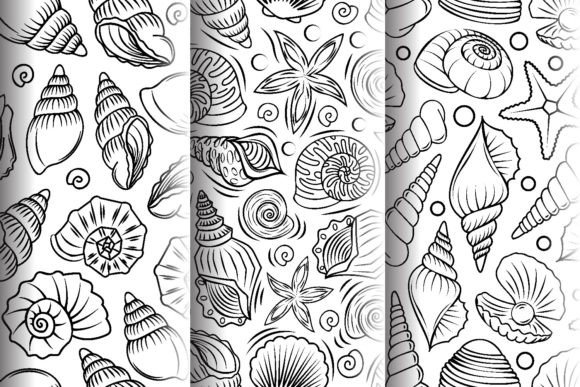
Shell and Starfish Patterns: A Modern Approach to Line Art Seamless Design
In the world of graphic design, seamless patterns have become a staple for creating visually engaging and repeatable visuals. Among the most popular are shell and starfish patterns, which offer a unique blend of organic forms and geometric precision. These designs are often crafted using line art, a technique that emphasizes outlines and minimal detail. This approach not only enhances visual clarity but also allows for greater flexibility in application across various design projects.
Line art is particularly well-suited for shell and starfish patterns due to its ability to highlight the natural curves and intricate structures found in these elements. By focusing on outlines rather than full color or shading, designers can create striking visuals that maintain a sense of elegance and simplicity. Whether used in fashion, interior design, or digital media, line art seamlessly integrates with both modern and traditional aesthetics.
The use of black and white colors further amplifies the impact of line art in shell and starfish patterns. This monochrome palette ensures that the focus remains on the form and structure of each element, allowing the viewer's eye to naturally follow the lines and contours. The absence of color also makes these designs highly versatile, as they can be easily adapted to different color schemes without losing their original intent or appeal.
One of the key advantages of working with shell and starfish patterns is their adaptability. These patterns can be scaled, rotated, and repeated without losing their integrity, making them ideal for use in textiles, wallpaper, and digital backgrounds. Additionally, the clean, precise lines of line art ensure that the patterns remain sharp and clear even when printed at high resolutions.
For designers looking to incorporate shell and starfish patterns into their workflow, having access to high-quality vector files is essential. Vector graphics allow for scalable and editable designs that maintain their quality regardless of size. This is particularly important when working with complex patterns like those featuring detailed shells and mollusks.
When selecting vector files for shell and starfish patterns, it’s important to consider the format and resolution. High-resolution vector files, such as those in AI (Adobe Illustrator) and EPS (Encapsulated PostScript) formats, ensure that the designs remain crisp and clear. These file types are especially useful for professional applications where print quality is paramount.
Among the available options, 300 ppi density is a standard that guarantees excellent print output. This level of resolution is crucial for maintaining the fine details of shell and starfish patterns, especially when the designs are intended for large-scale applications such as banners, signage, or packaging. The combination of high resolution and vector format ensures that the final product is both visually appealing and technically sound.
Designers who work with shell and starfish patterns may also benefit from having multiple versions of the same design. For instance, having three different high-resolution JPG files provides flexibility in how the patterns can be used. These images can be easily imported into design software or shared with clients, ensuring consistency across different platforms and devices.
Additionally, the availability of vector files in AI and EPS formats offers greater control over the design process. Unlike raster images, vector files can be edited and modified without any loss of quality. This means that designers can experiment with different layouts, adjust line thicknesses, or modify specific elements of the pattern without compromising the overall integrity of the design.
It’s also worth noting that shell and starfish patterns can be customized to suit specific project needs. Whether the goal is to create a subtle background texture or a bold, statement-making design, the versatility of line art allows for a wide range of creative possibilities. This adaptability makes these patterns an excellent choice for a variety of industries, including fashion, architecture, and digital media.
Another consideration when working with shell and starfish patterns is the importance of understanding the context in which the design will be used. For example, a pattern designed for a luxury brand may require a more refined and elegant aesthetic, while a pattern intended for a children's product might benefit from a more playful and whimsical style. Understanding the target audience and the intended use of the design helps ensure that the final result is both functional and aesthetically pleasing.
Moreover, the integration of underwater creatures into shell and starfish patterns adds another layer of depth and interest. These creatures, often depicted in linear illustrations, can enhance the narrative and emotional impact of the design. Whether it's a delicate seahorse or a vibrant jellyfish, incorporating these elements can make the pattern more engaging and dynamic.
Designers should also pay attention to the balance between detail and simplicity. While shell and starfish patterns can feature intricate details, it’s important to avoid overcrowding the design. A well-balanced pattern maintains visual harmony and prevents the viewer from feeling overwhelmed by too much information. This principle applies equally to both the shells and mollusks and the surrounding elements within the design.
Finally, it’s important to recognize the growing demand for customizable and high-quality design assets in today’s market. As more businesses and individuals seek out professional-grade materials, the availability of shell and starfish patterns in various formats and resolutions has become increasingly valuable. Whether you're a designer looking to expand your portfolio or a business owner seeking to enhance your branding, these patterns offer a versatile and effective solution.
By leveraging the strengths of line art, black and white color schemes, and high-quality vector files, designers can create shell and starfish patterns that are both visually compelling and functionally adaptable. These patterns not only meet the demands of modern design workflows but also provide a timeless and elegant aesthetic that resonates across a wide range of applications.